What Happens to Your Glucose When You Start a Competition Hard From the Gun?
How to "Prime"
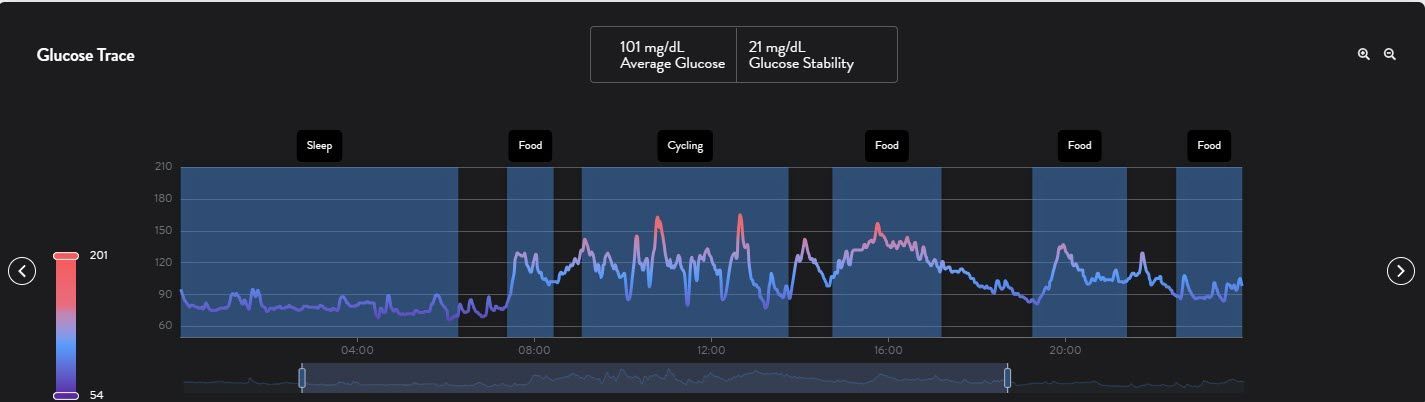
Have you ever watched those Olympic middle-distance runners? They start out fast and just get faster. There is no easing into the effort or ramping into the first lap. It's hard from the gun. There are many competitions where you have to be 100% prepared for maximal effort from the start. We talked about how to prepare yourself for this in the section on priming. What happens if you don't prime?
The Body Primes Itself Whether You Plan to or Not
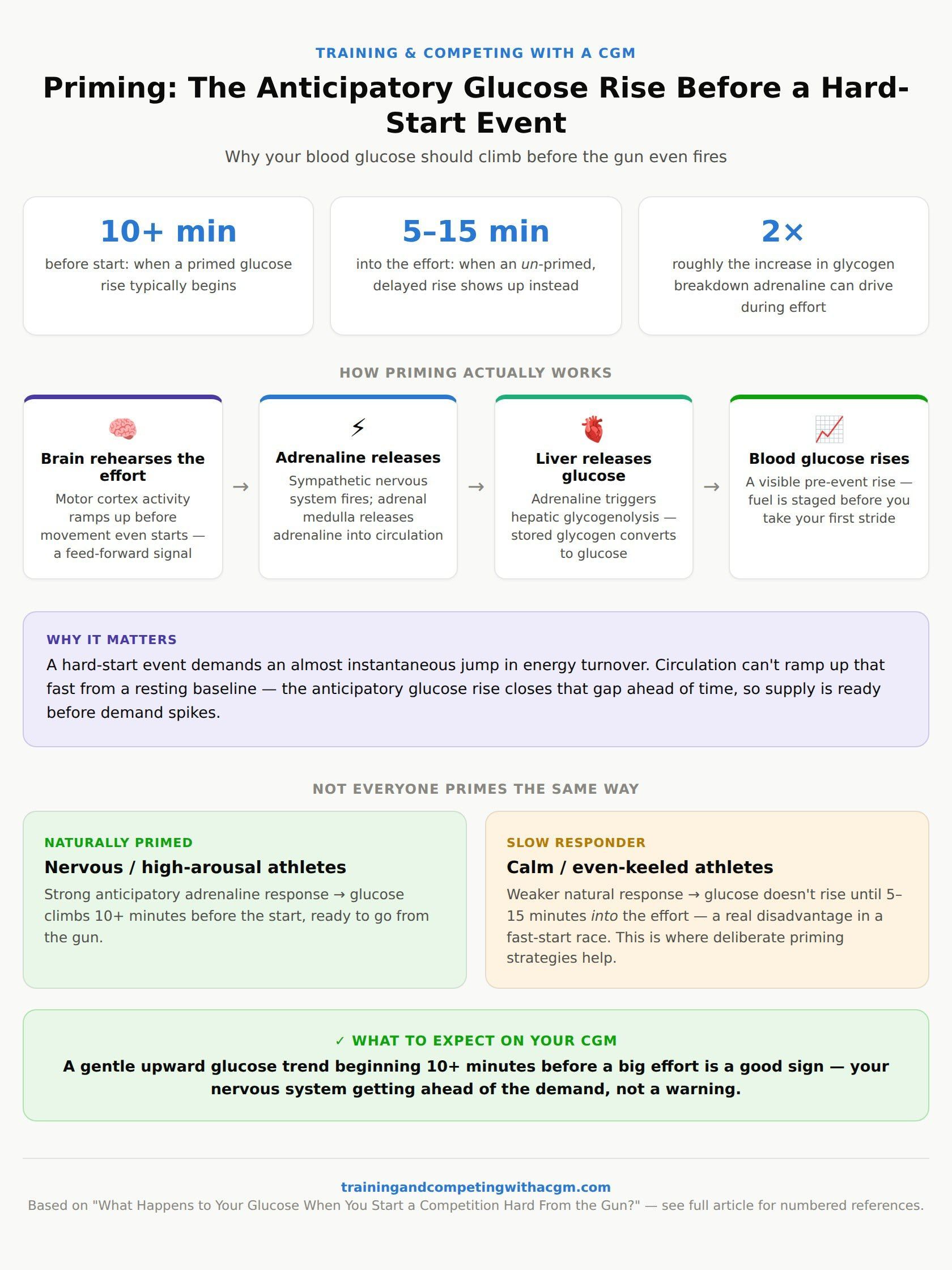
In high-pressure events like the Olympics, or an important event for you, or even just your first event where you might be anxious or nervous, your body will release adrenaline. This will also cause the liver to release glycogen (glycogenolysis) into circulation in anticipation of your effort (Jeukendrup A, Gleeson M. Sport Nutrition, 4th edition)[1]. This is a good thing. It's a natural priming and raising of blood glucose values to prepare you for the event. So, you should see an increase in your blood glucose 10 minutes or more before the event even starts. (The same thing can happen if you've got a big presentation at work, for example. Remember: mood, movement, and food?)
What's actually happening underneath that rise is worth understanding, because it explains why priming works and why it matters so much for a hard-start event.
The Nervous System Fires Before You Even Move
This anticipatory response doesn't wait for your muscles to start working and send feedback back up to the brain that fuel is needed. It's driven the other direction — from the top down. Research on the sympathoadrenal system shows there is a genuine feed-forward element to this process: increased activity in the motor cortex, the part of the brain planning and preparing the upcoming movement, activates the sympathetic nervous system in advance of the movement itself[2,3]. In practical terms, your brain is already rehearsing the effort in the seconds and minutes before the gun, and that rehearsal alone is enough to start dispatching hormonal signals downstream. This is sometimes called “central command,” and studies using nerve blockade have shown that this anticipatory sympathetic activation happens even when the resulting muscle force is experimentally blunted — the signal to prepare fires regardless of how much the muscle actually does with it[2].
The immediate downstream effect of that sympathetic surge is a release of adrenaline (epinephrine) from the adrenal medulla. Once in circulation, adrenaline acts on the liver to accelerate glycogenolysis — the breakdown of stored liver glycogen into glucose — pushing blood glucose upward before you've taken a single competitive stride[1,3]. Human studies that have directly infused adrenaline during exercise confirm this mechanism: adrenaline measurably increases glycogen breakdown and carbohydrate use during activity, roughly doubling the rate of muscle glycogen utilization in some trial conditions[4]. That's the biochemical machinery behind the intuitive idea of “priming” — your body is quite literally topping off the tank and opening the fuel line before it knows exactly how much fuel it'll need.
Why Bother Raising Glucose Before the Gun Even Fires?
A hard-start event, like a championship 800m or a fast-starting cycling pursuit, demands an almost instantaneous jump in energy turnover. Muscles can call on stored phosphocreatine and existing muscle glycogen for the first several seconds, but the broader systems that keep glucose flowing into the bloodstream and into working muscle take time to ramp up once exercise actually begins. If your body waited until the gun to start that process from a resting baseline, there would be a lag — a mismatch between what the effort demands in the first 10 to 20 seconds and what your circulation can actually deliver. The anticipatory catecholamine surge closes that gap ahead of time. It's a feed-forward solution to a timing problem: demand is about to spike suddenly, so supply gets a head start[2,3,4].
Not Everyone Primes the Same Way
Here's the part that matters most practically: this anticipatory response is not uniform across athletes, and it isn't purely physical — it's tied to arousal, nerves, and how “activated” your nervous system is by the moment. Research measuring catecholamines before maximal efforts has found meaningful rises in the minutes leading up to exertion, but the size and timing of that rise tracks with the individual and the situation, not a fixed schedule[2]. If you're a slow responder, or someone who doesn't get too worked up by things — including competitions or workouts — then you likely won't see a spike in glucose until about 5 to 15 minutes into the effort itself, and you'll experience this rise as a delayed spike instead of a head start. For an event that's hard from the gun, arriving underfueled for those opening seconds is a real disadvantage: pace lost early in a fast-start race is difficult, sometimes impossible, to make up later.
This is precisely why deliberate priming strategies exist. If your nervous system isn't going to reliably generate that anticipatory glycogenolytic response on its own — because you're even-keeled, experienced enough to stay calm, or simply not the type to get rattled by the moment — you can recreate the same effect intentionally rather than leaving it to chance. The goal of priming isn't to manufacture unnecessary stress; it's to make sure your glucose and glycogenolytic machinery are already staged and ready the moment the gun goes off, instead of playing catch-up while the race is already underway.
What This Looks Like on a CGM
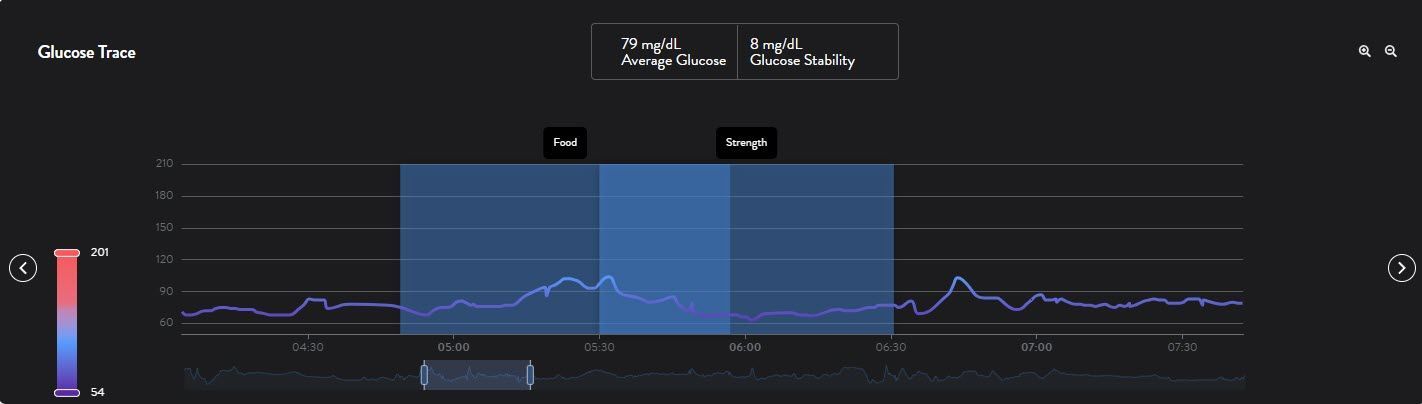
If you're wearing a continuous glucose monitor before a big effort, this is exactly the kind of pre-event rise you want to see — a gentle upward trend beginning 10 or more minutes before the start. Just like the post-exercise glucose response discussed elsewhere, context is everything: a rising glucose trend before a hard-start competition isn't a warning sign, it's your nervous system doing its job and getting ahead of the demand you're about to place on it.
References
1. Jeukendrup A, Gleeson M. Sport Nutrition: An Introduction to Energy Production and Performance. 4th ed. Champaign, IL: Human Kinetics; 2024.
2. French DN, Kraemer WJ, Volek JS, Spiering BA, Judelson DA, Hoffman JR, Maresh CM. Anticipatory responses of catecholamines on muscle force production. J Appl Physiol. 2007;102(1):94-102.
3. Ball D. Metabolic and endocrine response to exercise: sympathoadrenal integration with skeletal muscle. J Endocrinol. 2015;224(2):R79-R95.
4. Watt MJ, Howlett KF, Febbraio MA, Spriet LL, Hargreaves M. Adrenaline increases skeletal muscle glycogenolysis, pyruvate dehydrogenase activation and carbohydrate oxidation during moderate exercise in humans. J Physiol. 2001;534(Pt 1):269-278.